Water Leak Information
Water Leaks
Have you ever wondered if you have a water leak? You can use your water meter to help you find out.
Checking for a Leak at the Water Meter
Dripping Faucets are easily recognized. You will have a faucet that does not completely turn off, and you may hear an annoying "drip, drip, drip".
Leaking toilets are more difficult to detect. Water loss may be caused by leaking parts or an incorrect setting. You may not always hear the problem.
If the flapper valve in the toilet tank is not seating well, water will flow from the tank to the bowl and eventually down the drain as the bowl fills to a certain level. This problem can be detected by putting some food coloring into the tank. Wait a while and see if the water in the bowl has begun to change color. If so, the flapper valve is the problem. Check more than once. The flapper valve may seat properly some of the time, but not all of the time. This can make this type of water loss difficult to detect.
Another way that water loss can occur in a toilet is through the overflow in the tank. The overflow is the open pipe, usually located in the middle of the tank. If the float allows water to rise too high, water will go into the overflow pipe and down the drain. The best way to detect this is to take the top off the tank and see if water is at the top of the overflow pipe. If it is, the float may need to be adjusted.
Check for Leaky Faucets
The next place to check for leaks are your sink and bathtub faucets. Replacing the rubber O-ring or washer inside the valve can usually repair dripping faucets.
Landscape irrigation problems can also result in water loss. These problems normally occur when sprinklers are on. There may be a break in the line or a malfunction in one of the sprinkler heads. Check to see if some parts of your lawn remain wet even when the sprinklers have not been on.
Remember: These are just suggested places to look for water loss first, and are not intended to be all-inclusive. If you will check these things first, it may save both you and the Benton Water Department time and money.
Leak Size Chart
The following chart shows the amount of water that can be lost (and billed to your account) for various size leaks.
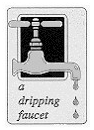 A dripping leak consumes:
15 gal. per day
450 gal. per month
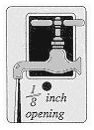 A 1/8 in. leak consumes:
3,806 gal. per day
114,200 gal. per month
 A 1/32 in. leak consumes:
264 gal. per day
7,920 gal. per month
 A 1/4 in. leak consumes:
15,226 gal. per day
456,800 gal. per month
 A 1/16 in. leak consumes:
943 gal. per day
28,300 gal. per month
 A 1/2 in. leak consumes:
60,900 gal. per day
1,827,000 gal. per month